
Perspectivas de Escucha
Paco Yáñez (Colaborador)
Paco Yáñez | «I want to be free from my ego and just to receive the stream of the music in the universe» Toshio Hosokawa
08/05/2025An interview by Paco Yáñez for El Compositor Habla

Unanimously recognized as the most important Japanese composer of the 21st century, Toshio Hosokawa (Hiroshima, 1955) will turn seventy years old in 2025, an occasion that will be doubly celebrated in Spain, both with his artistic residence at the Palau de la Música in Valencia and with the award of the ‘XVII Premio Fundación BBVA Fronteras del Conocimiento’ in Music and Opera, one of the world’s most prestigious prizes in these fields.
As stated by the jury of this award, Toshio Hosokawa is “one of the most original and acclaimed creators of our time. His extensive catalogue, which covers all genres, is inspired both by Zen philosophy and by the use of a highly rigorous timbral writing with a highly original and recognisable richness.”
In the nearly two hundred works he has composed, Toshio Hosokawa has excelled in bringing European avant-garde music and the traditions of his native Japan into dialogue, both in terms of music (with a special mention for his traditional instruments, Buddhist chant and gagaku) and in terms of inspiration in the Noh theatre and in the crucial importance that nature and the call for harmony between human beings and the different cultures that inhabit the planet have acquired in his scores: an issue that has gained a great presence in his latest operatic works, as we will see in this interview.
On the occasion of his visit to Spain to work with the Orquesta de Valencia in what was the last concert of his artistic residency at the Palau de la Música on 28 March, a concert in which two of his works were performed, the orchestral Meditation to the victims of Tsunami (3. 11) (2011-12) and the opera Futari Shizuka (2017), we spoke with Toshio Hosokawa at the Palau de la Música in Valencia, an institution to which we are grateful, as well as to Toshio Hosokawa himself, for the facilities provided for this interview, and to Joan Gómez Alemany for the audiovisual recording of the interview.
1. Paco Yáñez: Welcome to Valencia. We are very happy that you are working, as composer-in-residence, with the Orquesta de Valencia this season, but, first of all, we have to congratulate you on the great prize you have been awarded in Spain, the ‘Fundación BBVA Fronteras del Conocimiento’ in Music and Opera, one of the most important prizes of its kind in Europe. I believe that you have had the honour of being on a list of great composers who have a marked personality and style; a list that is now made even bigger by your presence. There is a time in life when you enter, when you are young, for awards; and there is another time in life when awards come to you, after a career of achievement and having created a personality for yourself. You will be seventy years old in 2025, so what has changed between the Toshio Hosokawa of when you were in your twenties, when you were submitting for these kinds of awards, and the Toshio Hosokawa who is now receiving these important awards?
Toshio Hosokawa: It is a very difficult question. I am very honoured. I know this prize because when I lived in the Wissenschaftskolleg, together with Helmut Lachenmann, he received this prize, and he went to Bilbao to get this prize, in a ceremony. I lived together with him at that time in this residence in Berlin, so when he came back, he said: “I have got the forty euros!” (it was a joke between us), but I never thought that I would get that prize, so I’m very honoured.
It’s about fifty years that I compose, beginning when I was a student and I researched my roots: Where are my roots? So, I started to study Japanese traditional music and, at the same time, European avant-garde music: both are in my way to research and to find my own language. I did a lot of things. Japanese traditional music was always very, very important for me, but not in an exotic mood to use it, but more I wanted to find the substance of the Japanese traditional music and to write some music after that. Now, I don’t think a lot about the Japanese music, I’m more free and I don’t want to compose with my ego, I want to be free from my ego and just to receive the stream of the music in the universe. I want to listen more and I just want to receive what is there, that energy. This is really very different, because in my old pieces I wanted to do something, I wanted to make new Japanese music, this was a very strong wish. But now I don’t do so much this research and more I want to be free, and I just want to listen what I want to listen, that is different.
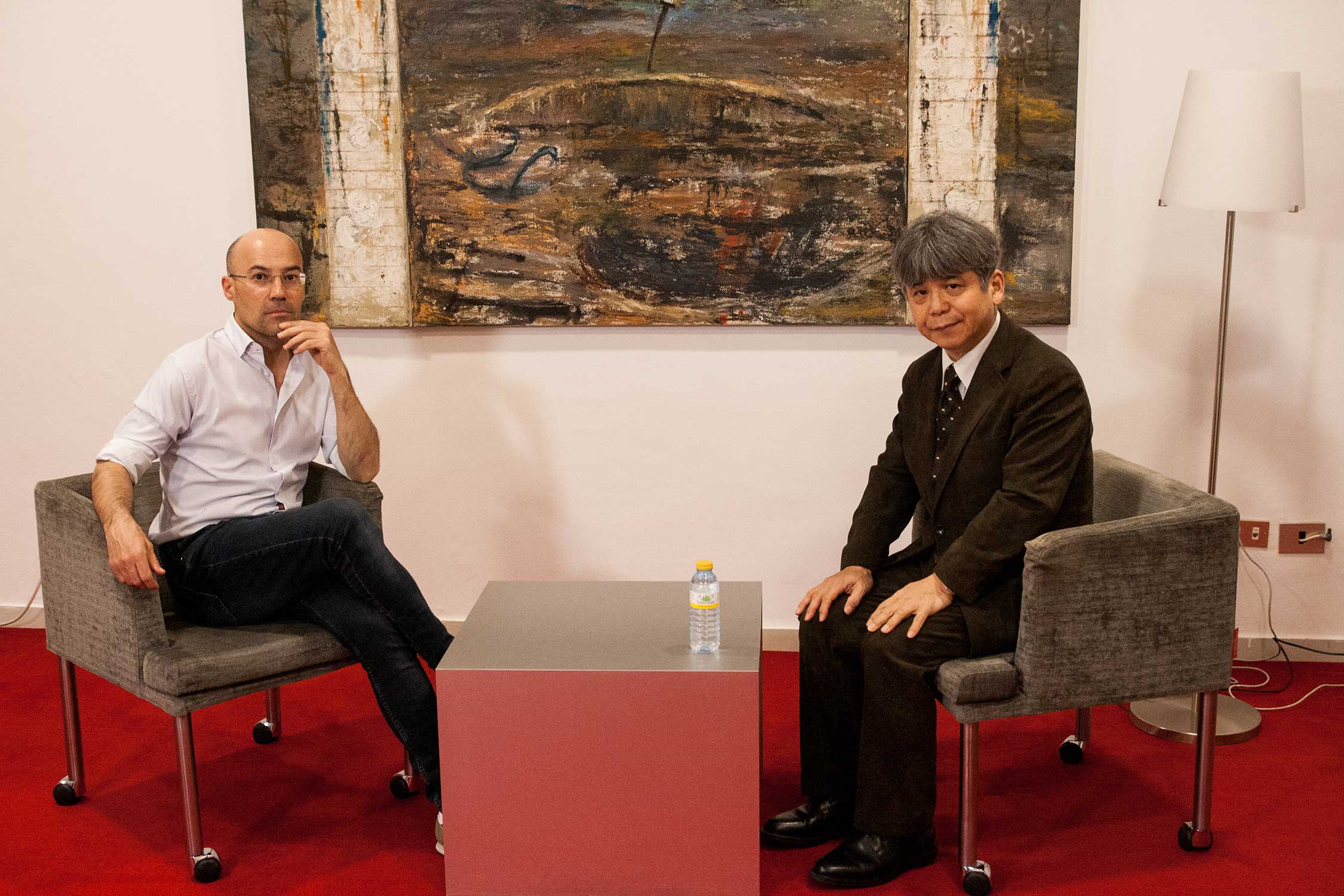 2. P.Y.: In addition to this important award that you will receive in Bilbao, this year you have another kind of, let's call it award, also in Spain, and that is that you are composer-in-residence at the Palau de la Música in Valencia. What does it mean, for Toshio Hosokawa, to be composer-in-residence in a European orchestra nowadays?
Toshio Hosokawa: I’m very happy. They can play not only one time my music, so they can play more better my music and also knowing me, personally. The second time they played my music they played my Violin Concerto (2020). Now I have also a very good relationship with the members of the orchestra, they’re very nice and they play wonderfully; and Alexander Liebreich knows very well my music and he conducts really very, very well. I’m very, very happy as a composer in residence in the Orquesta de Valencia.
3. P.Y.: We have heard the excellence you speak of this morning in rehearsals, which have been really very good. Today we will have a whole concert with the music of Tōru Takemitsu and yours. Were you involved in deciding which of his pieces should be performed? Was it a decision of the orchestra?
Toshio Hosokawa: I think that I’ve talked about with Alexander Liebreich and we discussed what could be good, so we decided together.
4. P.Y.: Although your music has been performed for many years in Europe, what do you think European performers find more difficult, not in terms of technique, because the technique of orchestral musicians is usually very good, but in terms of spirit and understanding of the Japanese part of your music?
Toshio Hosokawa: Very good European musicians can understand immediately my music, without saying anything; but sometimes the problem is the silence, because silence is not the rest, silence is density, something the sound needs to exist, and this idea is sometimes difficult to understand. But also, in Japan, I have this problem, because some musicians can’t understand this. They use to play European classical music and they don’t know Japanese traditional music, so this difficulty is the same.
5. P.Y.: Your music is very much related, you have said it several times, to calligraphy, but calligraphy starting from the point in the air which is silence and filling this silence, this Ma, which is the concept of Japanese primordial silence: filling and dissolving back into silence. However, do we have silence today in our societies, or has that silence been lost amidst so much noise and so many uninterrupted communications? Should we find more silence in our lives?
Toshio Hosokawa: Yes, but even in Tokyo, that there’s a lot of noise, we still have some silence inside. This, probably, comes from the Buddhist meditation: just silence, sitting down and to breath very slowly, this kind of education that we receive when we were child. So, a little bit, we have that.
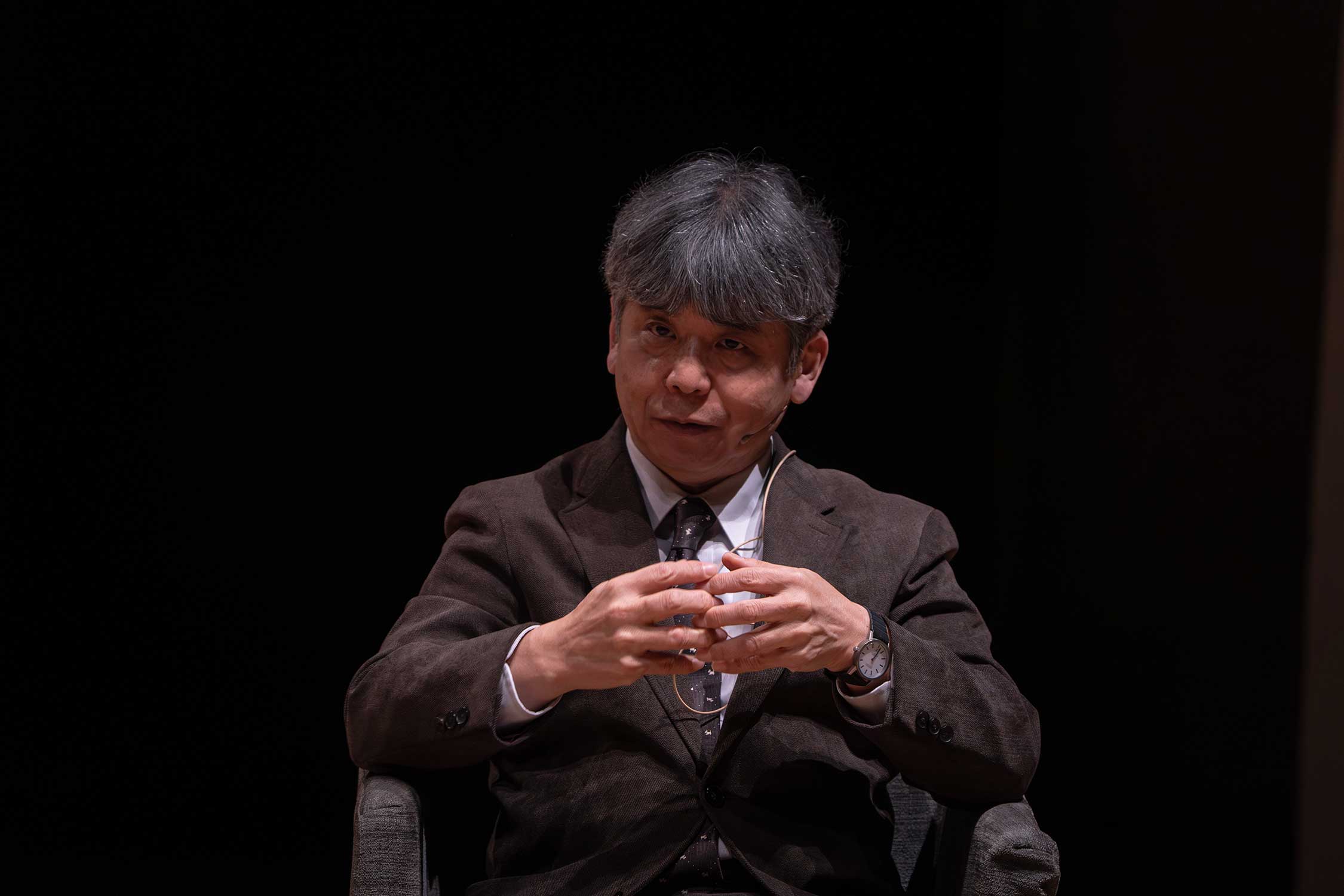 6. P.Y.: You have now said something very interesting: that Japanese orchestras sometimes have problems understanding the Japanese part of their music, and this could be related to the fact that when you were young you were fascinated by European and avant-garde music, probably not paying as much attention to Japanese music then as you do today. Do you think this is something that is still happening with young Japanese musicians and composers, who might be paying more attention to the Western tradition than to their own roots?
Toshio Hosokawa: Myself, when I came to Europe, I was twenty years old, I didn’t know well the Japanese traditional music, although I listened to a lot, because you know that my mother played a Japanese instrument [koto], but at that time I thought that was boring music. So, I found it outside Japan, in Europe, where I could listen Japanese music. Many Japanese musicians, also today, they don’t know well about.
7. P.Y.: It is curious, because many European and American composers, such as José María Sánchez-Verdú, Hans Zender, John Cage or Helmut Lachenmann, were and are fascinated by Japanese music, by Japanese instruments, such as the shō. Sometimes we might even be more interested in Europe than some people and musicians are in Japan itself.
Tonight's concert brings together your music and the music of Tōru Takemitsu, who was one of your teachers, and as the years go by, sometimes I think you are somehow getting closer to Takemitsu, so I would like to ask you what is your relationship with Takemitsu’s music and with Takemitsu’s ideas, because he was a great thinker in terms of what are the relations between West and East, his writings are really very interesting in that respect.
Toshio Hosokawa: I started to be composer after my encounter with the music of Takemitsu, when I was a child. I was only twelve or thirteen years old when I have listened November Steps (1967), a piece by Takemitsu for shakuhachi, biwa and orchestra, played by Seiji Ozawa and the New York Philharmonic, and that was for me a big shock and since then I loved Tōru Takemitsu’s music; and then, personally I knew him and he was very kind and he was one of my most important mentors. His music became more soft, elegant, but I still love his music and his thinking about the Ma and the sound, is the most important thing.
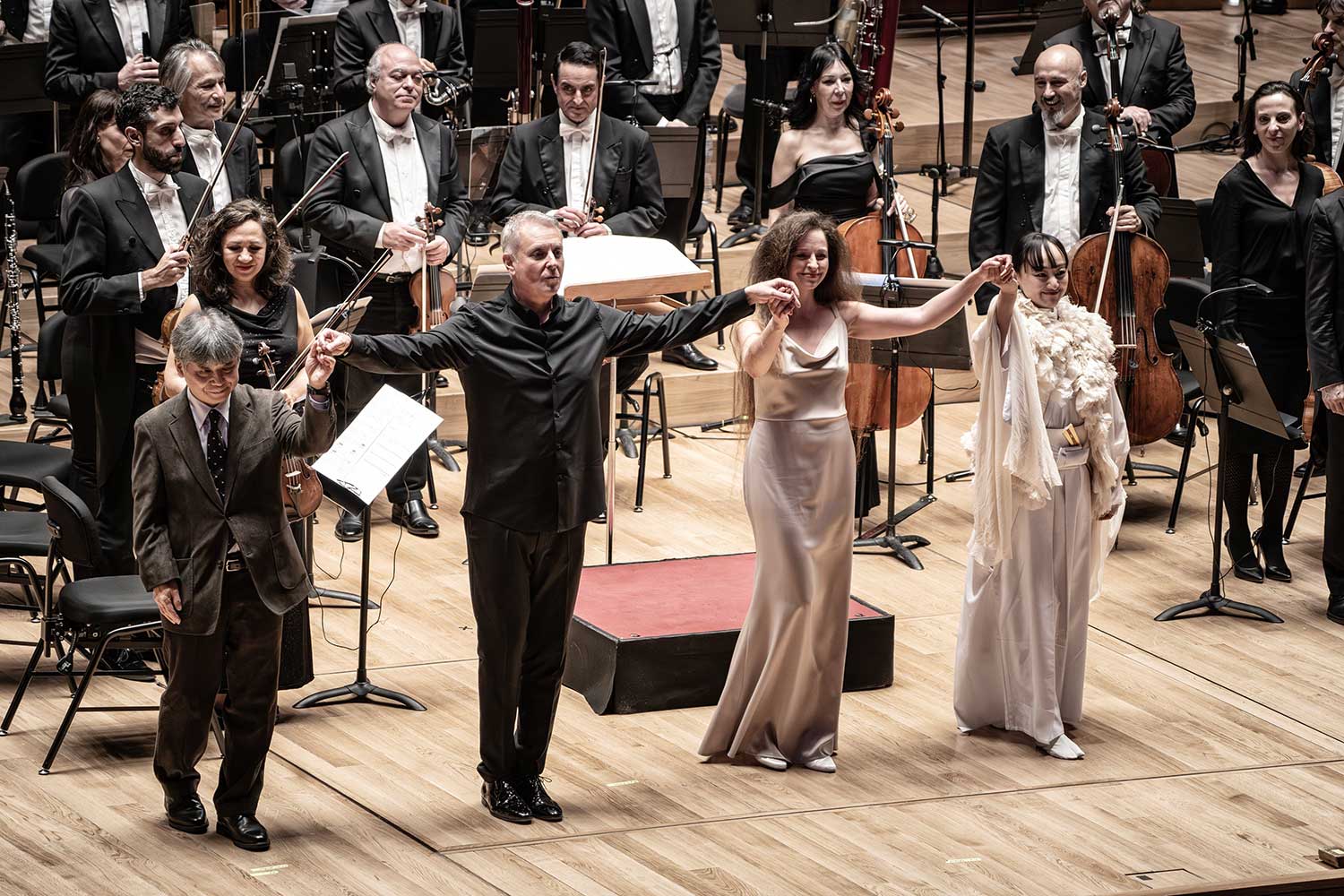
8. P.Y.: I have the feeling that, since you’ve been back to spend more time in Japan, your music has gone more into that elegance and serenity, becoming more contemplative. Do you feel that way? Maybe it’s related to what you said before, to the fact that you're more open to listening now.
Toshio Hosokawa: I became old. I am a little bit tired with European avant-garde music. I love it very much, and you know my relationship with Helmut Lachenmann and other great composers that I respect a lot, but in myself I must compose a different music. I’m not an avant-gardist. In this sense, I want to compose more meditative and silent music. But that is also because of my age.
9. P.Y.: Well, you are not so old for now, you’re not yet seventy, that will be next October. At the same time, there is something in your music that is related to the timbre, to the sound of Japanese instruments. Although you have used the shakuhachi, the koto and some other traditional Japanese instruments, do you perhaps now feel more the need to work, from time to time, with traditional Japanese instruments, or do you still prefer to use the Western orchestra to create this evocation of these traditional Japanese instruments?
Toshio Hosokawa: The problem is that we have very few Japanese musicians for Japanese traditional instruments, very few. You know, for example, for the shō, it’s only Mayumi Miyata, but only one. At the same time, there are so many wonderful Japanese violin players, piano players and orchestral players. It is so difficult, because shakuhachi players maybe there are only one or two, so it is even difficulty to find really good musicians for these traditional instruments to work together, so I want to compose more for Western instruments.
10. P.Y.: There are Western composers, such as Helmut Lachenmann or John Cage, who have composed for shō, but Japanese shō players find the traditional way of playing shō very different from what those European and American composers have done. If you were to compose more specifically for traditional Japanese instruments, would your composing style change much?
Toshio Hosokawa: Basically, it’s the same, the same idea: that of calligraphy.
11. P.Y.: At tonight's concert we will hear your opera Futari Shizuka. If I’m not mistaken, this is your seventh opera, how would you present it to us?
Toshio Hosokawa: It has a very strong influence from the Noh theatre, the Japanese theatre, which is a ghost story. The ghost cannot sleep well in the other world and comes into this world to sing, dance and talk about his sadness, and after his performance found the stillness in his soul and comes back to the other world. All Noh theatre is like this, and this is what I want to do. By Noh theatre there is one corridor between this world and the other world, we call it Hashigakari, ‘Hashi’ means a bridge, and the ghost protagonist comes through this bridge into this world, and does his performance and comes back. I want to make this musical bridge between this and the other world. The protagonist is a shaman, that connects this world and the other world, so for me this protagonist, Helen, is a shaman.
12. P.Y.: In your music, and in your thinking, shamanism is becoming very important in recent years, you have said so yourself several times, so this opera would be a new example of that.
Toshio Hosokawa: I learnt it by Noh theatre, about this idea.
13. P.Y.: You are now composing a new opera, the title of which will be Natasha. How could you introduce it to us?
Toshio Hosokawa: It’s about a very actual problem. In the opera there are two refugees, a young Japanese man called Arato (although it is a role to be sung by a mezzo-soprano) and a young Ukrainian woman called Natasha (soprano). The third main protagonist is Mephisto’s grandson (baritone), who comes and shows seven different hells. This hell is really this world with natural catastrophes, with war, money and some businessman. So, this is a little bit Dantesque, and in dreams they both can find a new love and a new language. This is the story.
14. P.Y.: We could say, and probably this historical moment requires it, that your music is also political, in the sense that the opera we will hear tonight, Futari Shizuka, is also about a refugee. To what extent do you think that music should also reflect politics in a world that seems to be going crazy?
Toshio Hosokawa: Yes, it’s crazy. I don’t want to make propaganda. I just have been influenced by this reality. My music is not political, but if I live here, in this world, somehow I have to say something, that’s why I composed this.
15. P.Y.: Well, actually you have said much more than ‘something’, as Futari Shizuka is indeed a very beautiful and transcendental opera. Beauty and transcendence are two crucial aspects of your music, as of your good friend Helmut Lachenmann’s, but can they be taught, and what is the fundamental task of a composer in teaching young composers?
Toshio Hosokawa: When I teach young composition students, I always tell them to study carefully the excellent music of the past, especially the classical music of the 20th century and beyond. In particular, I tell them to read the scores and to study in depth the various masterpieces around 1910 and the masterpieces of the 1960s. They should be familiar with the great works of composers such as Arnold Schoenberg, Anton Webern, Igor Stravinsky, Pierre Boulez, Luciano Berio, Luigi Nono, György Ligeti, and many others. They also need to study the works of the great living composers of our time.
16. P.Y.: You have told us about your new opera, Natasha, but what other works are you currently composing?
Toshio Hosokawa: I am just composing the opera Natasha. I want to concentrate on this opera.
17. P.Y.: You already have a very important discography that allows us to get to know your music better and listen to it more frequently, although there are many works from your extensive catalogue that have not yet been recorded. What recording projects do you have soon and which of your works that have not yet been recorded would you like to see on disc?
Toshio Hosokawa: Japanese young and excellent pianist Tomoki Kitamura wants to make a CD with my piano works. Also, I composed a piano quintet for him and the Arditti Quartet. They have just recorded my Piano Quintet “Oreksis” in Cologne by the WDR. It will be a very beautiful recording and CD.
18. P.Y.: As I said at the beginning of this interview, we are very happy that you are here again, so we hope to meet you soon in Spain, as you will be in Bilbao to receive the award. Arigatō! Thank you very much!
Toshio Hosokawa: Thank you very much.
The photos are by Joan Gómez Alemany and Live Music Valencia / Palau de la Música Archive, courtesy of the Palau.
© Paco Yáñez. April 2025
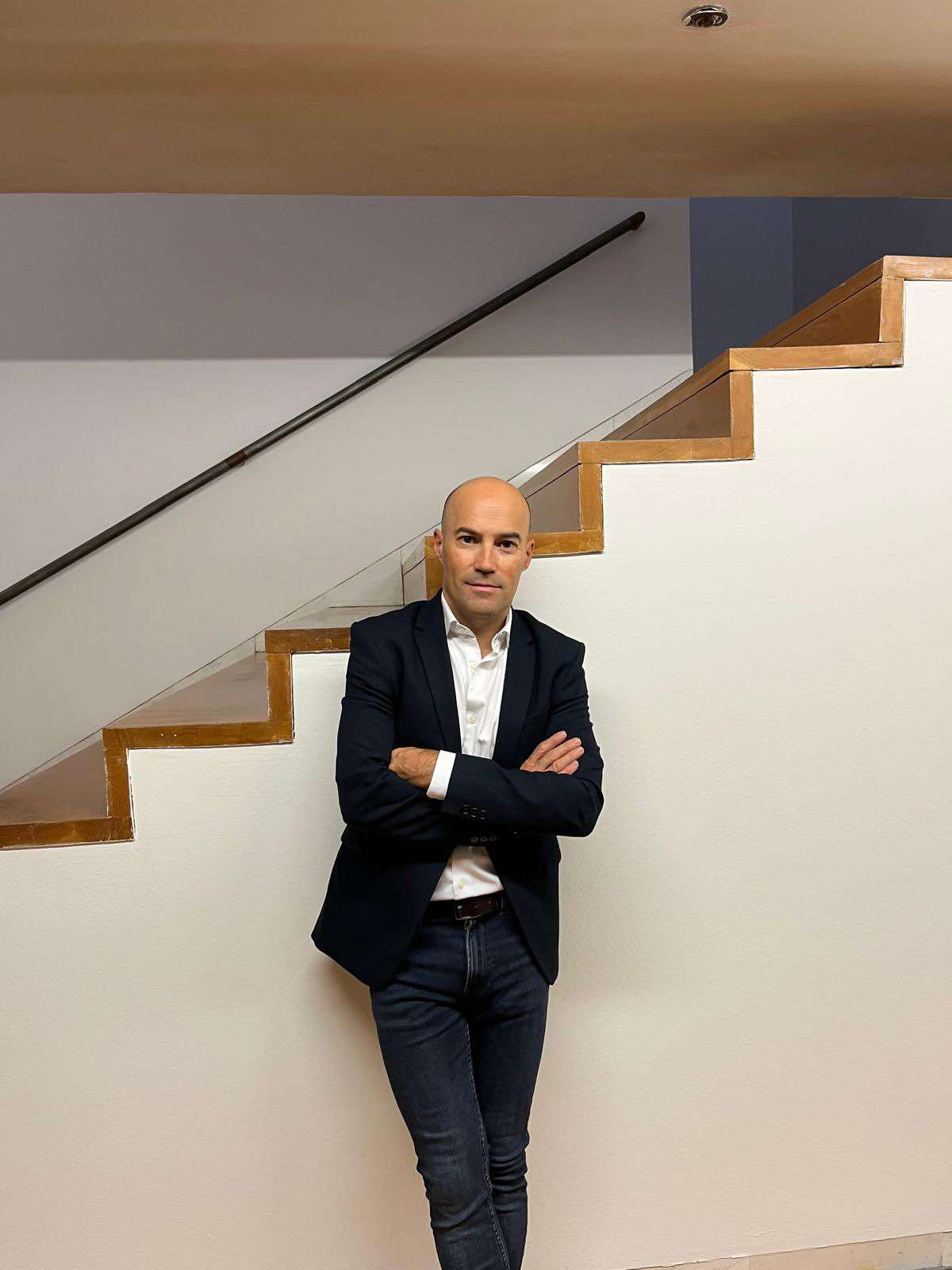
Paco Yáñez (Santiago de Compostela, 1974) develops his creative activity in the intersection and dialogue of diverse artistic languages; notably, photography, music, film, and literature. This is the path followed by his two published novels: ...distancias... (Baía Edicións, 2008) and contra(de)cadencia (Laiovento, 2014), as well as by his essays, interviews, and music reviews, published in eight languages in specialized media in the Americas and Europe. His collaboration with the international newspaper Mundoclasico.com is notable, as are his notes for concerts and albums. Various European and American composers have created musical works inspired by his photographs and poetic texts, interdisciplinary dialogues that articulate his entire work. He has given lectures at conservatories, auditoriums, and cultural venues, such as the University of Santiago de Compostela, the Auditorium of Galicia, the MARCO in Vigo, the Luis Seoane Foundation, and the Galician Center for Contemporary Art, among others. Some of his lectures are available on YouTube. His photographs have been exhibited and published in art and music exhibitions, catalogs, and magazines, both in Spain and abroad, including specialized institutions and media such as Sibila magazine, the CGAC magazine, Ricordi, and others. In the field of cinema, he has collaborated on the documentaries Correspondencias sonoras (2013) and Enrique X. Macías. A lira do deserto (2020), works by Manuel del Río.
More information on his YouTube channel: Paco Yáñez
Biblioteca
Destacamos ...
Nueva Sección Directorio
dedicada a la promoción de compositores, intérpretes, instituciones y editoriales.

dedicada a la promoción de compositores, intérpretes, instituciones y editoriales.


